Understanding Umami: Cooking With the Fifth Taste
For most of Western culinary history, taste was described using four categories: sweet, sour, salty, and bitter. In 1908, Japanese chemist Kikunae Ikeda identified a fifth basic taste he called umami, a Japanese word roughly meaning pleasant savory taste, after isolating glutamate from kombu seaweed broth. Modern food science has since confirmed that specific taste receptors on the tongue respond to glutamate and certain nucleotides, giving umami a physiological basis distinct from the other four tastes.
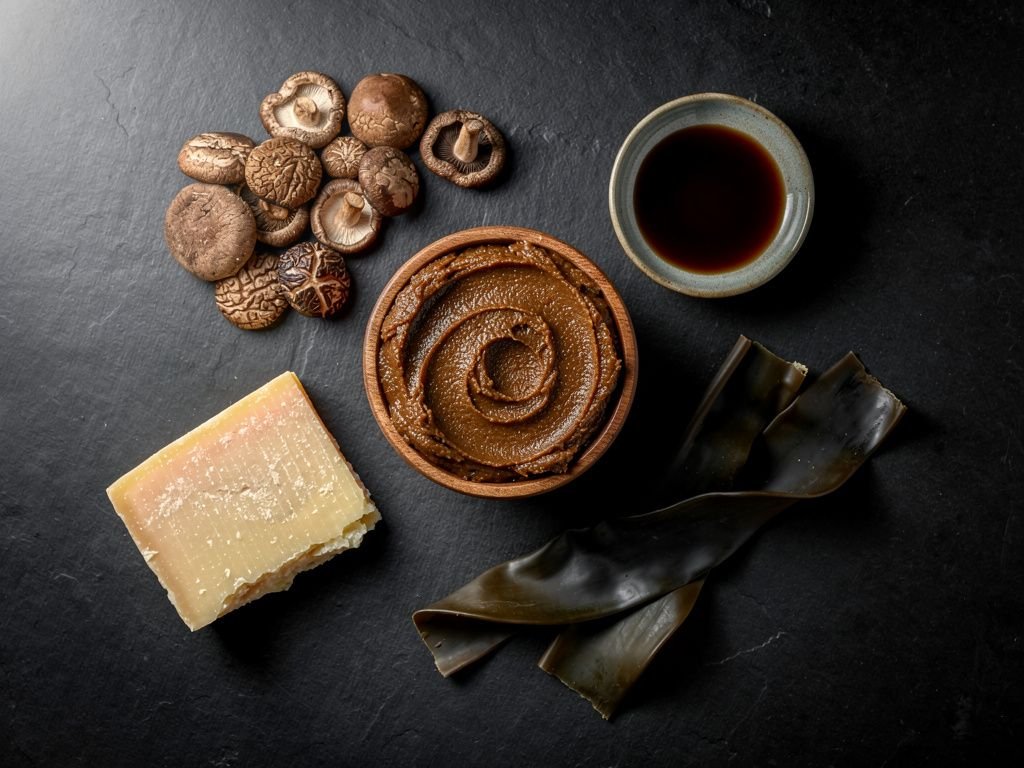
Glutamate occurs naturally in many foods, and its concentration is what makes certain ingredients taste deeply savory rather than simply salty. Aged parmesan cheese, ripe tomatoes, soy sauce, mushrooms, cured meats, and seaweed are all naturally high in glutamate, which is part of why combinations like tomato and parmesan or mushroom and soy sauce taste so satisfying together.
Fermentation and aging tend to increase umami because the process breaks proteins down into their component amino acids, including glutamate. This explains why aged cheeses taste more savory than fresh ones, why cured ham has more depth than fresh pork, and why a long-simmered stock outperforms a quick one, since extended cooking extracts glutamate and other flavor compounds from bones and connective tissue.
Nucleotides, particularly inosinate found in meat and fish and guanylate found in dried mushrooms, act synergistically with glutamate, meaning the combination tastes far more intensely savory than either compound alone. This is the science behind classic pairings like a dashi broth made from kombu and dried bonito flakes, which combines a glutamate source with an inosinate source for a broth that tastes dramatically more savory than either ingredient brewed separately.
Building umami into everyday cooking does not require rare ingredients. A splash of fish sauce in a vegetable stir fry, a spoonful of tomato paste browned into the base of a soup, a handful of dried shiitake mushrooms rehydrated and added to a braise, or a rind of parmesan simmered in a pot of beans will each noticeably deepen the finished flavor.
Miso paste is another versatile source, adding savory depth to salad dressings, soup, glazes for roasted vegetables, and even baked goods like chocolate chip cookies, where a small amount rounds out sweetness without tasting distinctly like miso.
Worcestershire sauce, anchovies, and soy sauce all function as what chefs sometimes call flavor amplifiers, meant to be used in small quantities to boost a dish's overall savoriness rather than to be tasted directly. A single mashed anchovy fillet melted into the base of a pasta sauce disappears completely while making the whole dish taste richer.
Understanding umami gives home cooks another tool alongside salt and acid for balancing a dish. When something tastes flat despite being properly salted and seasoned, the missing element is often umami, and a small addition from this list can be the difference between a good dish and a genuinely craveable one.
More from the Journal
Choosing the Right Cooking Oil for Every Dish