Fermentation Basics for Home Cooks
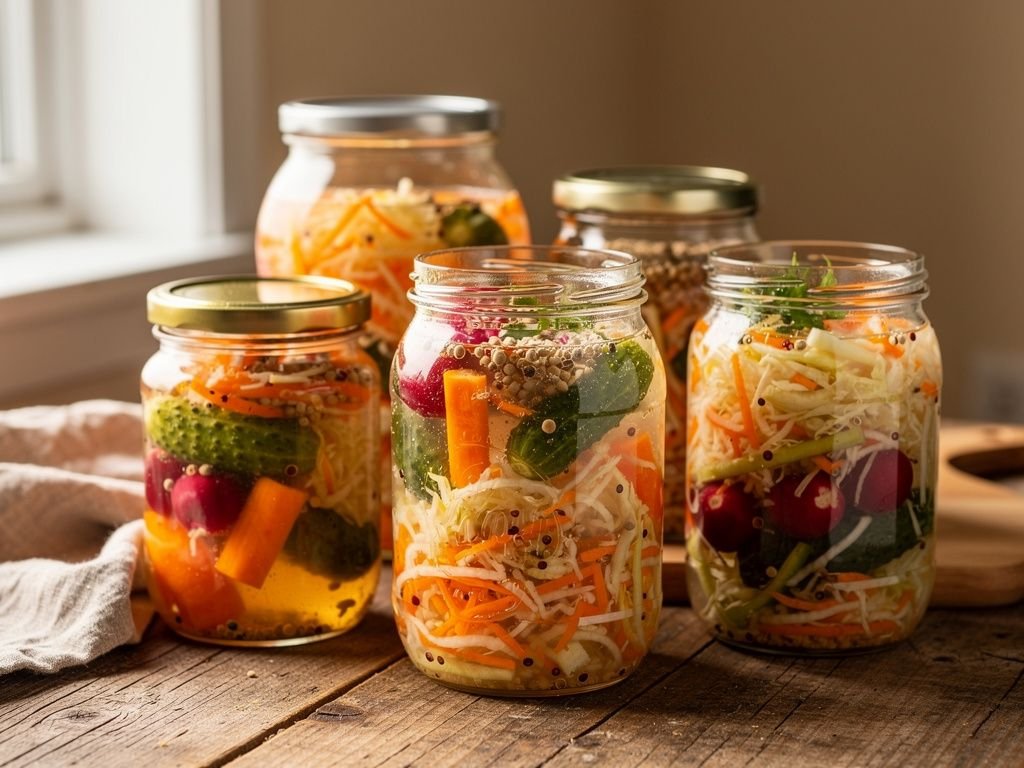
Fermented vegetables have a tangy complexity that vinegar-based quick pickles cannot fully replicate, because the sourness in a true ferment comes from lactic acid produced by live bacteria rather than added acid poured in from a bottle. The process, called lacto-fermentation, is one of the oldest food preservation methods, and it is far more approachable at home than most people expect.
The core principle is simple: a salt brine, typically 2 to 3 percent salt by weight of water, creates an environment where salt-tolerant lactic acid bacteria naturally present on vegetables can thrive, while less tolerant spoilage organisms are suppressed. Over days to weeks, those bacteria convert sugars in the vegetables into lactic acid, which is what produces the characteristic sour flavor and also acts as a natural preservative.
Cabbage, as in sauerkraut, is often the easiest starting point because the vegetable itself provides enough liquid when salted and massaged, without needing an added brine. Shred cabbage, toss it with about 2 percent of its weight in salt, and massage or pound it until it releases enough liquid to submerge itself, then pack it tightly into a jar, weighing it down so it stays under the liquid.
For firmer vegetables like cucumbers, carrots, or green beans, a separate brine is easier: dissolve salt in water at roughly 2 to 3 percent by weight, submerge the vegetables completely, and weigh them down with a fermentation weight or a small clean jar filled with water. Submersion matters enormously, since any vegetable exposed to air is at risk of mold, while vegetables kept under the brine ferment safely.
Temperature controls the pace of fermentation more than almost any other factor. A cool room, around 60 to 70 degrees Fahrenheit, produces a slower ferment with a more complex flavor over one to three weeks, while a warmer kitchen speeds things up but can produce a softer texture and a flatter flavor. Taste your ferment every few days once it has been going for about a week, and move it to the refrigerator once it reaches a sourness you like, since cold significantly slows the bacteria without stopping the process entirely.
A small amount of white, harmless film called kahm yeast can form on the surface of some ferments; skim it off if it appears, it is not dangerous, though it can affect flavor if left. Fuzzy mold in colors like green, black, or pink is a different matter and means the batch should be discarded, which almost always traces back to vegetables that were not kept fully submerged.
Once you are comfortable with basic sauerkraut or dill pickles, the same salt-brine principle extends to kimchi, fermented hot sauce, and even fermented garlic honey, each of which layers additional flavor onto the same underlying microbiology.
Homemade ferments also offer live probiotic bacteria that shelf-stable, pasteurized store-bought pickles typically no longer contain, since pasteurization for shelf stability kills the very bacteria responsible for fermentation in the first place.