The Science of Searing: Understanding the Maillard Reaction
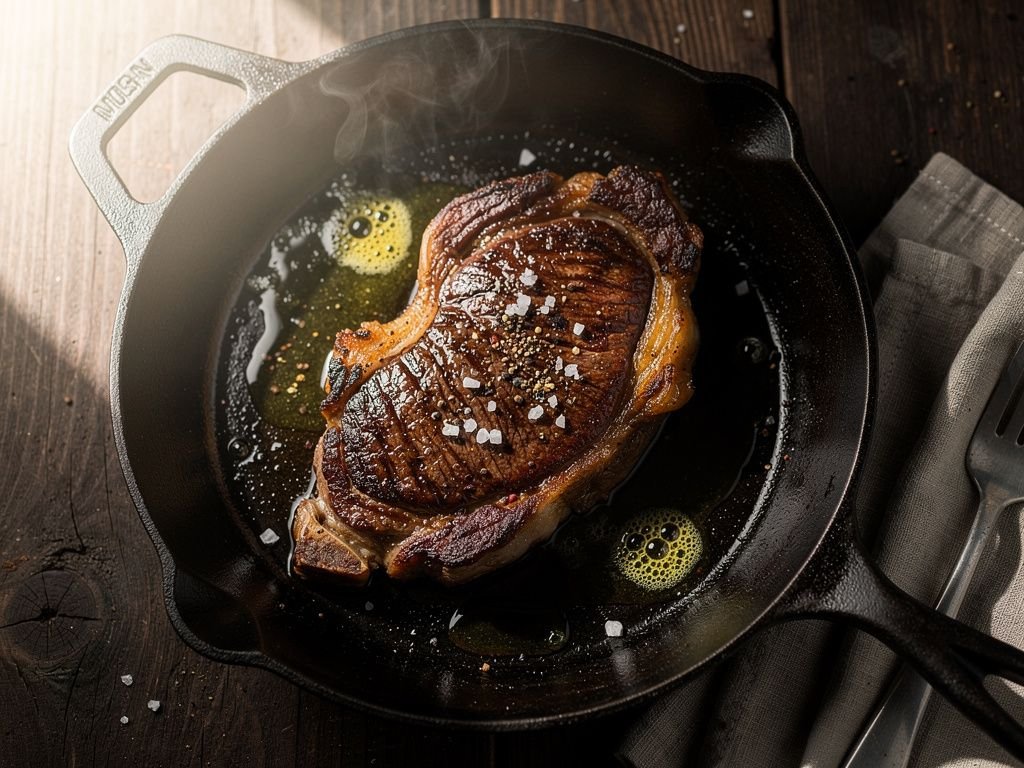
The deep brown crust on a well-seared steak, the golden surface of toasted bread, and the color of a good cup of coffee all share the same underlying chemistry, named after French chemist Louis-Camille Maillard, who first described the reaction between amino acids and reducing sugars in 1912. Understanding what conditions the reaction needs makes it far easier to reproduce reliably at home.
The Maillard reaction requires heat, typically starting around 280 to 330 degrees Fahrenheit, and it accelerates as temperature rises further. This is well above the boiling point of water, which is the single most important fact for a home cook to internalize: as long as there is surface moisture on food, that moisture has to evaporate first, cooling the surface toward 212 degrees Fahrenheit and delaying browning, before the Maillard reaction can begin in earnest.
This is why recipes so consistently instruct you to pat meat dry before searing. Any surface moisture acts as a heat sink and a barrier, meaning a wet steak takes noticeably longer to develop color than a thoroughly dried one, and the extra time spent waiting for browning often means the interior overcooks before the exterior ever gets a proper crust.
Salt draws moisture to the surface through osmosis, which is why salting a steak and letting it sit uncovered in the refrigerator for thirty minutes to overnight actually improves searing rather than hurting it: enough time passes for that drawn-out moisture to evaporate off the surface, leaving a drier exterior than if the steak had never been salted at all. Salting immediately before searing, by contrast, can leave the surface wetter at the exact moment it hits the pan.
A hot, dry pan and a thin layer of high smoke point oil are the other half of the equation. Cast iron and carbon steel both hold heat exceptionally well, meaning they recover temperature quickly after food is added, unlike a lightweight pan that can drop in temperature and stall the reaction the moment a cold piece of meat touches the surface.
Avoid moving the food too early. The Maillard reaction also happens to be what creates the natural release most cooks associate with nonstick coatings: proteins bond to the hot metal at first contact, then that bond breaks on its own once a proper crust has formed. Food that seems stuck to a stainless or cast iron pan usually just needs another thirty seconds to a minute before it releases cleanly.
Basting with butter near the end of a sear, tilting the pan and spooning melted butter and aromatics like thyme and garlic over the food, adds additional browning compounds from the milk solids in the butter, which is part of why a butter-basted steak develops a more complex crust than one cooked in oil alone.
Once you see searing as a controllable chemical process rather than a matter of luck, the fixes for common problems become obvious: dry the food, preheat the pan longer than feels necessary, resist the urge to move food too soon, and choose a pan material that holds its heat under a cold, wet piece of protein.
More from the Journal
Choosing the Right Cooking Oil for Every Dish