A Practical Guide to Baking With Alternative Flours
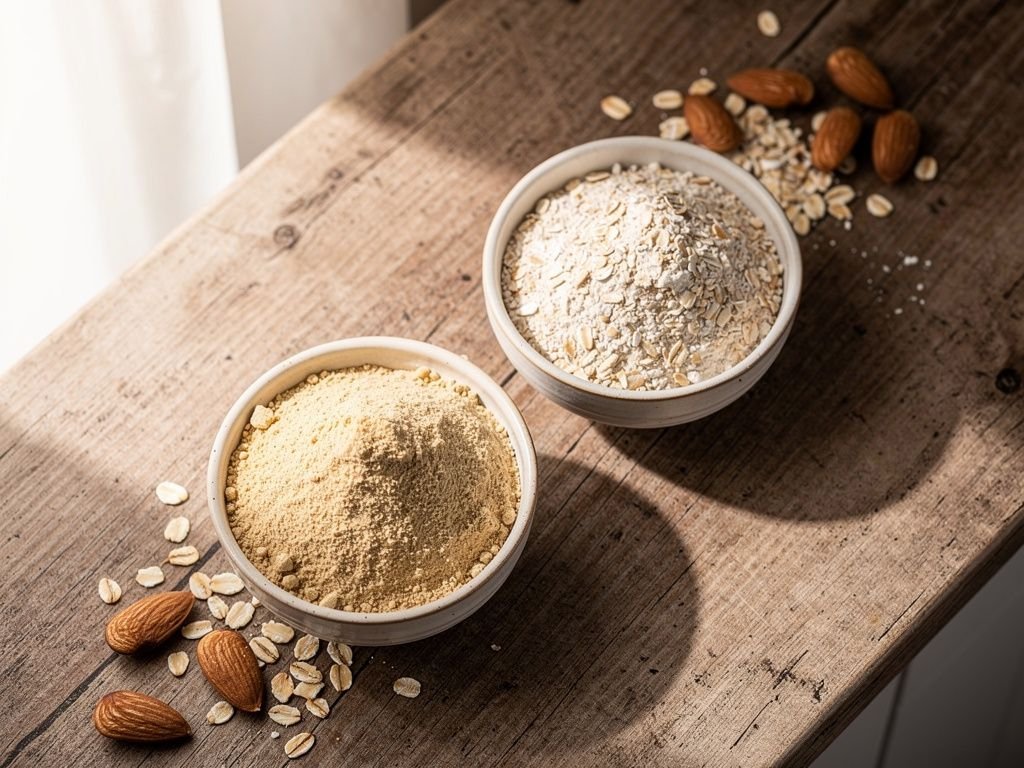
Substituting flours is one of the most common ways home bakers run into trouble, because flour is not just a filler ingredient, it provides the structural protein and starch that hold a baked good together. Swapping flours without adjusting the rest of the recipe often produces something dense, gummy, or crumbly, but understanding each flour's properties makes substitution far more predictable.
All-purpose wheat flour contains moderate protein, roughly 10 to 12 percent, which forms gluten when mixed with water and kneaded or beaten. Gluten is what gives bread its chew and cakes their structure, so any substitute flour without comparable gluten-forming protein needs a different approach to hold the final product together.
Whole wheat flour has the same gluten-forming potential as all-purpose flour but includes the bran and germ of the wheat kernel, which are sharp-edged and absorb more liquid. Replacing more than half of the flour in a recipe with whole wheat typically requires adding two to four extra tablespoons of liquid per cup of flour, and the finished product will be denser and nuttier regardless.
Almond flour contains no gluten at all and is made from finely ground almonds, so it behaves more like a fat-rich ingredient than a starch. It cannot replace wheat flour on a one-to-one basis in most recipes; it works best in recipes specifically developed for it, such as certain cookies and quick breads, usually stabilized with additional eggs to provide the structure gluten would normally supply.
Oat flour, made from ground rolled oats, also lacks gluten but absorbs liquid differently than almond flour, tending to produce a softer, slightly gummy texture on its own. It performs best blended with a portion of wheat flour, commonly replacing 25 to 30 percent of the total flour, which adds moisture retention and a mild sweetness without sacrificing structure.
Rice flour, both white and brown, is very fine and absorbs liquid quickly, making it useful as a thickener and in gluten-free baking blends, but on its own it tends to produce a texture bakers describe as sandy or gritty. It generally performs best combined with a starch like tapioca or potato starch and a binder like xanthan gum in a gluten-free flour blend, rather than used alone.
When converting a wheat-based recipe to a gluten-free one, a reliable starting point is a blend of 40 percent rice flour, 30 percent a starch such as tapioca, and 30 percent a protein-adding flour like almond or sorghum, plus roughly half a teaspoon of xanthan gum per cup of blend to help mimic gluten's binding effect.
Rather than guessing at ratios from scratch, it is often more reliable to start from a recipe specifically developed for the flour you want to use, then apply what you have learned about that flour's behavior to adjust liquid and leavening as needed for your specific pan size or altitude.
More from the Journal

Choosing the Right Cooking Oil for Every Dish